Singapore is a country that prides itself on meritocracy, and indeed most Singaporeans are proud of that too. The basis is that meritocracy is fair in that everyone has a chance to raise up in the society as long as you have merit, regardless of your ethnicity and your social class.
However, recently, I began to have second thoughts about meritocracy. One of the problems I find is that it breeds a sense of entitlement and a tendency towards indifference for the less fortunate. It is common to find people who feel they are entitled to huge rewards, believing that they deserve so purely because of their own merits, and disregarding any forms of interactions with other people that lead them there. And then there are people who thought the poor deserves to be poor because they are not working hard enough.
Today, I come across another interesting idea in the Straits Times article Misguided fight against 'inequality' (by Samuel Brittan. Straits Times, 8 Oct 2011 p.A39). What is interesting is that the article referred to Hayek's an argument that there is a difference between "value" and "merit". What we are actually doing in the name of meritocracy is not so much rewarding people for their merit as much as their value. Perhaps that's where meritocracy starts to go wrong.
According to Friedrich A Hayek:
The inborn as well as the acquired gifts of a person clearly have a value to his fellows which does not depend on any credit due to him for possessing them. There is little a man can do to alter the fact that his special talents are very common or exceedingly rare. A good mind or a fine voice, a beautiful face or a skilful hand, and a ready wit or an attractive personality are in a large measure as independent of a person's efforts as the opportunities or the experiences he has had. In all these instances the value which a person's capacities or services have for us and for which he is recompensed has little relation to anything that we can call moral merit or deserts. Our problem is whether it is desirable that people should enjoy advantages in proportion to the benefits which their fellows derive from their activities or whether the distribution of these advantages should be based on other men's views of their merits.
For the full reading on this idea, see the following URL:
http://www.woldww.net/classes/General_Philosophy/Hayek-equality.htm
Saturday, October 8, 2011

Monday, October 3, 2011
On conventional wisdom
We Associate truth with convenience with what closely accords with self-interest and personal well-being or promises best to avoid awkward effort or unwelcome dislocation of life. We also find highly acceptable what contributes the most to self-esteem.
Thursday, September 15, 2011
曾经有一个人爱过
J,你跟我说过,在你状况最差的时候,有一个人爱着你,你很感激。
我明白,那只是一份感激而已,你无法以爱回应。
谢谢你陪我走了这一段。无法给你什么。希望你会记得:
曾经,在你状况最差的时候,有一个人爱过你。
我明白,那只是一份感激而已,你无法以爱回应。
谢谢你陪我走了这一段。无法给你什么。希望你会记得:
曾经,在你状况最差的时候,有一个人爱过你。
Friday, September 2, 2011
Oceanful of tears
The Buddha said,
I wonder, how much more tears will I shed?
Sentient beings are subjected to- Sutra on Relieving Sorrows.
Much sufferings in endless cycles of birth and death;
And the tears shed from being separated from loved one,
Is enough to fill an ocean.
I wonder, how much more tears will I shed?
Wednesday, August 31, 2011
与爱别离,泪流成海
在释见介著的《与佛陀赏花去》里,看到了这么一句:
佛经说:“我们过去生中与所爱的人分离所流的眼泪,比四大海的海水还要多”
那我在无止的轮回中,曾流了多少,还会流多少?
-----------------------------------------------------
注:出自《佛说解忧经》
“又彼有情,生死别离,爱恋泣泪,亦如海水”。
Sunday, June 19, 2011
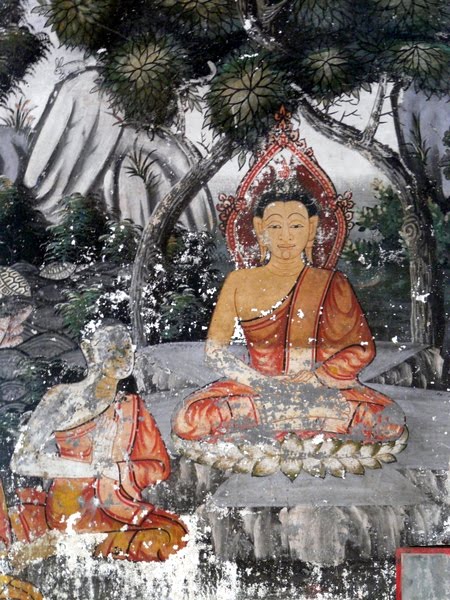
Images from temples in Northern Thailand
Some pictures from my recent backpack trip in Northern Thailand. These are mainly from Nan and Lampang.




Subscribe to:
Posts (Atom)